
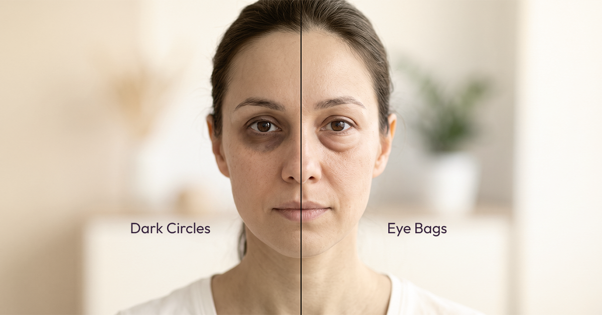
The under-eye area can change the way the whole face looks. However, dark circles and eye bags are not the same concern, even though they often appear together. Dark circles usually involve discoloration or shadows, while eye bags are more related to puffiness or changes in the tissues beneath the eyes. Understanding the difference can help you choose a more suitable approach to dark circles under eyes treatment in Glendora, CA.
At AATMA Inc., we look at the specific cause of an under-eye concern before suggesting treatment options. This helps create a plan that focuses on what is actually affecting the appearance of the eyes.
What Are Dark Circles?
Dark circles refer to darker-looking skin or shadows beneath the eyes. They can appear brown, blue, purple, or gray, depending on your skin tone and the underlying cause.
Several factors can contribute to dark circles, including:
- Genetics and natural pigmentation
- Thin under-eye skin
- Visible blood vessels
- Loss of facial volume
- Dehydration
- Lack of sleep
- Sun exposure
- Natural changes in the skin with age
Because there are several possible causes, dark circles cannot always be addressed with the same treatment.
What Are Eye Bags?
Eye bags are different because they are mainly associated with puffiness or fullness beneath the eyes. They may become more noticeable in the morning or after periods of poor sleep, but they can also develop because of age-related changes.
As the skin loses elasticity, the tissues around the eyes can change. Fat that normally supports the eye area may also become more visible, creating a puffy or swollen appearance.
Some people have both eye bags and dark circles, which can make it tricky to identify the main concern just by looking in the mirror.
Dark Circles vs. Eye Bags: What Is the Main Difference?
The easiest way to think about it is this: dark circles are mainly about color or shadow, while eye bags are mainly about puffiness or fullness. If the skin under your eyes looks darker but remains relatively flat, pigmentation or visible blood vessels may be contributing to the appearance.
On the other hand, if you notice a raised or puffy area under the eyes, you may be dealing more with eye bags. There can also be a third factor: hollowness. A hollow tear trough can create shadows that look like dark circles even when the skin itself is not significantly darker.
What Can Make Dark Circles More Noticeable?
Dark circles can become more obvious for several reasons. Lack of sleep may make the area look dull, while dehydration can make the skin appear less plump. Sun exposure can also contribute to pigmentation. In addition, naturally thin skin can make underlying blood vessels more visible.
Age-related volume loss is another common factor. When the area beneath the eyes becomes more hollow, shadows can develop and make the eyes appear darker. That is why simply getting more sleep may not completely change the appearance for everyone.
What Can Cause Eye Bags?
Eye bags can be influenced by both temporary and long-term factors. Fluid retention may make the area look puffier, particularly after waking up. Allergies and certain lifestyle factors can also contribute to temporary swelling.
Over time, however, changes in skin elasticity and the tissues around the eyes may play a larger role. If puffiness is persistent, professional assessment can help determine whether it is mainly related to fluid retention, skin changes, or the underlying structure of the eye area.
Which Treatments May Help Dark Circles?
The best option depends on why the area looks dark. For pigmentation, certain professional skin treatments may help improve uneven tone. Chemical peels may be considered in suitable cases to support skin renewal.
PRP therapy is another option that may be used to support collagen production and improve the appearance of delicate under-eye skin. Microneedling may also be considered for certain skin texture concerns.
When hollowness contributes to shadows, under-eye fillers may be an option for appropriate candidates. The goal is to restore subtle volume and create a smoother transition between the lower eyelid and cheek.
Common Treatments for Dark Circles
Professional care may include:
- PRP therapy: Uses platelet-rich plasma to support collagen production and skin renewal.
- Microneedling: Creates controlled micro-injuries that encourage the skin’s natural collagen response.
- Chemical peels: May help address certain pigmentation and texture concerns.
- Under-eye fillers: Can address volume loss and shadows in suitable candidates.
- Customized facials: Can support hydration and overall skin quality.
Not every treatment is suitable for every person. A consultation is important before choosing an option.
What About Treatments for Eye Bags?
Treatment for eye bags depends heavily on the underlying cause. If temporary fluid retention is involved, lifestyle changes and appropriate skincare may help reduce the appearance of puffiness. However, persistent bags caused by structural or age-related changes may require a different approach. Non-surgical skin treatments may help improve skin quality in some cases, but they may not completely change prominent structural bags.
This is why it is important to distinguish puffiness from pigmentation before choosing a treatment.
Can You Have Both Dark Circles and Eye Bags?
Absolutely. Many people have a combination of concerns. For example, someone may have under-eye puffiness along with pigmentation or visible blood vessels.
Hollowness can add another layer by creating shadows beneath the eyes. When several factors are present, treating only one concern may not produce the change you are hoping to see.
At AATMA Inc., we can assess the under-eye area and discuss which concerns are most noticeable. From there, treatment can be tailored around your skin and goals.
Find the Right Approach for Your Under-Eye Concerns
If you are not sure whether you have dark circles, eye bags, hollowness, or a combination of these concerns, professional assessment can clear things up. Instead of trying random products, you can learn what is actually contributing to the appearance.
Explore personalized dark circles treatment in Glendora with AATMA Inc. and discuss professional options suited to your under-eye skin.
How Can You Support Your Results at Home?
Professional treatments work best when paired with sensible daily skincare. Use sunscreen regularly because UV exposure can worsen pigmentation and contribute to visible skin aging. Keep the delicate eye area moisturized and avoid rubbing or pulling the skin. Getting adequate sleep and staying hydrated may also help the area look fresher, although these habits cannot correct every type of dark circle or eye bag.
Most importantly, be patient. Skin treatments often require time and consistency before changes become noticeable.
FAQs
Q1) Are dark circles and eye bags the same thing?
No. Dark circles mainly involve discoloration or shadows, while eye bags are usually associated with puffiness or fullness beneath the eyes.
Q2) Can lack of sleep cause both dark circles and eye bags?
Poor sleep can make existing dark circles more noticeable and may contribute to temporary under-eye puffiness. However, it is not the only possible cause.
Q3) Can fillers help dark circles?
Under-eye fillers may help when hollowness or volume loss creates shadows that look like dark circles. They are not appropriate for every person.
Q4) Can PRP improve the appearance of dark circles?
PRP may support collagen production and improve the quality and appearance of delicate under-eye skin. Suitability depends on the individual’s concerns and skin condition.
Q5) How do I know which treatment is right for me?
A professional consultation can help identify whether pigmentation, hollowness, puffiness, thin skin, or multiple factors are contributing to your under-eye appearance.
Give Your Under-Eye Skin More Focused Care
You do not have to guess whether pigmentation, shadows, puffiness, or volume loss is behind your under-eye concerns. A professional evaluation can help identify the difference and guide your next step.
If you are considering dark circles under eyes treatment in Glendora, CA, connect with AATMA Inc. to discuss your concerns and explore a personalized treatment plan.